
by Art Waskey | May 30, 2023 | Art of Sales Weekly, Featured
Digitization
Digitization is the name of the game in today’s fast-paced world of sales. Technology options can seem overwhelming but to be competitive you have to continually up your digital IQ.
Four Recommendations
Here are four recommendations to help you achieve the highest level of tech expertise.
- Don’t be afraid to start. New technology can be overwhelming but you need to dive in. When the company I was with built its first high-pressure cylinder control system (a system for verifying cylinders at customer locations), it failed miserably. Our president complained about the time and energy wasted but I saw it as a valuable learning experience. Thirty years later that company has a cylinder control system faster than most of its competitors and developed for less money.
- Focus on the most needed areas. Your technology IQ focus should be on those areas that promise the greatest return on your investment. Some companies start on the backend — inventory, and accounting — with an ERP system. Others start with their CRM. The distributor I was with started with a CRM 30 years ago because it was available at an affordable cost. The company moved on from the original provider after a few years to a CRM that had a better understanding of its industry.
- Establish your KPIs. You need to identify what kind and level of information drives your business and establish your KPIs accordingly. For some parts of the business, you may need to outsource your data analytics. This can be done without spending large sums. In other cases, you will want the analytics generated in-house. Hire IT techs as needed and check progress against your KPIs.
- Prioritize. In a world full of technology options you need to be able to prioritize. Look for what is most important for your company to digitize. Spend time and set aside a budget for some experimentation so you can find the systems that will transform your business most effectively.
Stay Competitive
Remaining competitive in today’s market requires a high technology IQ. Don’t be afraid to start, focus on technology that promises the greatest ROI, and establish KPIs that address your digital goals.
Get tips and tricks like the above in The Art of Sales books. Or subscribe to the FREE monthly articles here.
by Art Waskey | May 22, 2023 | Art of Sales Weekly, Featured
The best measure of performance is a satisfied customer. Today’s digital business practices enable swifter transactions. However, they can be a stumbling block when it comes to addressing customer concerns and satisfaction. For example, I recently tried to resolve an issue with my internet and TV provider and was connected to an automated digital agent. Following prompts, I typed in my problem only to receive a list of online tutorial solutions. I did not make any actual human contact during the session, and I ended up feeling frustrated as my problem remained unsolved. This begs the question, how can we better serve our customers in today’s business environment?
The Personal Touch
We all know that customer frustration is bad for business. The good news is that, as independent distributors, we have the ability to do business in a better way. While alternative channels have caused us to move more interactions online to remain competitive, we are still in touch with customers on a much more personal level than the big guys. This allows us to create better digital pathways targeted to our customers’ needs. Using our resources to optimize performance, we can answer questions better than an automated agent. We can provide the personal touch.
Increasing Shareholder Value
Protecting the integrity of your shareholders, from base-line employees to customers, is a great way to optimize performance. Everyone, from your warehouse worker to the chief executive, is in a position to help improve the efficiency of the company. This puts you in a position of great flexibility when it comes to problem-solving. With employees focused on operational excellence, you will realize increased revenue and bottom-line growth.
Service
Lastly, In today’s fast-paced business environment, the surest path to a satisfied customer base is made by providing the best service. Make excellence in serving your company’s priority.
Get tips and tricks like the above in The Art of Sales books. Or subscribe to the FREE monthly articles here

by Art Waskey | May 15, 2023 | Art of Sales Weekly, Featured
Happy employees create happy customers. Don’t let employee complaints reach your customers’ ears. Optimize employee performance by providing your team with the best resources.
The Right Technology
One of your most important performance-optimizing resources is your CRM. Meanwhile, make sure it is up-to-date. With the right digital tools your workforce can harvest data that allows them to do their job better. Be sure your team has useable analytics tailored to your customers’ needs. Remember, more data isn’t necessarily the right data.
Look at your tooling. How many clicks does it take to get the user to the right information? Make sure the accounts receivable department is getting to their sales counterparts in a timely manner. Also, you don’t want collection issues to mount up. The right ERP system removes the silos that so often slow down distribution.
Keep in mind that the upcoming generation of customers is used to quick order fulfillment. Today’s consumer expects Amazon-like results. Furthermore, people expect their B2B services to be as accessible as the B2C services they are accustomed to. Keep your eCommerce solutions current to optimize performance.
The Value Stream
Focus on your value stream for a happier customer base. Everyone in your company can influence your success in a positive way if they are equipped to do so. Additionally, ask your team members, “What is the most difficult part of your day?” Find out what would make their job easier then give them the tools they need. Happy employees can show you ways to produce optimized solutions.
Peak Performance
Aligning your technology with the needs of your shareholders is absolutely crucial for achieving peak performance. Offer something that the large verticals can’t match — a collaborative customer experience. Make sure your employees have the resources they need to provide excellent customer satisfaction. Happy employees make happy customers and a secure revenue base.
Get tips and tricks like the above in The Art of Sales books. Or subscribe to the FREE monthly articles here.
by Art Waskey | May 1, 2023 | Art of Sales Weekly, Featured
In the Digital Era
Traditional relationship skills as well as AI technology are necessary for successful selling in the digital age. The ability to identify customer needs has always been a requirement for sales representatives. Also, AI technology enables reps to do that quickly and efficiently by analyzing customers’ previous transactions and preferences. As a result, Combining AI data with traditional relationship-selling tools is a new way to win business and reps need help adjusting to this change.
Action Items
Furthermore, your sales team needs to have guidance navigating this new world of technology applications. A recent press release from Gartner recommends company Chief Sales Officers explore the following actions to successfully evolve a hybrid sales strategy:
- Bring together sales and marketing leaders to set a multichannel strategy for customer learning paths, including account-based campaigns and digital sales playbooks.
- Rethink the role of digital engagement by building digital sales tools for real-time collaboration with customers.
- Equip sales reps with probing questions and decision support tools to help buyers learn more effectively and make confident decisions.
What to Include in Your Strategy
According to Kevin McGirl, President and Co-Founder of sales-I, with the use of AI intelligence, your sales strategy can include:
- Customer behavioral information. Current data predictive analytics can provide an understanding of each customer’s interaction preferences. Additionally, this behavior identification makes it easier and faster to communicate added value to the customer’s specific needs.
- Increased sales competency. New and/or inexperienced field sales reps can be supported by faster product and selling skills assistance through advanced digital technology. Consequently, “How to” information and training for reps on their smartphones can ramp up capabilities quicker.
- Broader information and conversation points. Altogether, proactive information covering the rep’s territory and customers can be more efficiently and effectively accessed.
Combine Techniques
In conclusion, help your sales team adjust to changes and new ways of selling. Show them how to combine historic trusting relationship skills with current AI technology and watch them succeed.
Get tips and tricks like the above in The Art of Sales books. Or subscribe to the FREE monthly articles here.

by Art Waskey | Apr 25, 2023 | Art of Sales Weekly, Featured
Motivation and Restraint
John Grisham is one of my favorite writers. I only read his books on vacations because once started, I can’t stop. As a weekly sales and leadership writer I have to spend a lot of time on business podcasts, webinars, whitepapers, and associated books. If I get started on a good leisure time book, I don’t have the discipline to put it down. To remain motivated to meet my weekly goal of written projects, I have to exercise restraint with leisure reading.
Motivation and Success
Motivational stories inspire us. We admire J.K. Rowling (single mom struggling to make ends meet who wrote the Harry Potter books), Steven Spielberg (who snuck into a filming of a real movie at the age of 17 while on a tour at Universal Studios), and Dolly Parton (the fourth of twelve children in a one-room cabin in Tennessee).
Grisham’s fictional book, Sooley, concerns a 17-year-old war-torn South Sudanese boy who fights his way out of depravity with a basketball. Sooley’s goal of playing basketball in America pushes him to succeed. He exemplifies how motivation leads to success.
Key Motivators
The motivational stories above all have two important themes:
Goal achievement – Norman Vincent Peale said, “No one can get anywhere unless he knows where he wants to go and what he wants to be or do.” Numerous studies have shown only three percent of the population set goals and only about one percent write them down. To achieve your goals, it is important to identify them. I make a list of my dreams each year and this has led to many achievements. In my 40s, I became a Distinguished Speaker. My 50s were dedicated to becoming a published writer and I wrote 3 books. I went back to school in my 60s to earn a Master of Ministry degree. Now in my 70s, I write weekly, consult, and travel the country speaking.
High motivation – Success requires an enormous amount of motivation. To boost your level, surround yourself with motivated people. Their energy is contagious. If you are part of a motivated team, your achievement level escalates. You can do anything if you set goals. As Walt Disney said, “All our dreams can come true if we have the courage to pursue them.”
Move Toward the Prize
Don’t wake up tomorrow realizing you are in the same place as you were yesterday. Motivate yourself. Clearly identify your goals and then focus your time and energy on moving in the direction of the prize – your success.
Get tips and tricks like the above in The Art of Sales books. Or subscribe to the FREE monthly articles here.
by Art Waskey | Apr 20, 2023 | Art of Sales Weekly, Featured
Core Strength
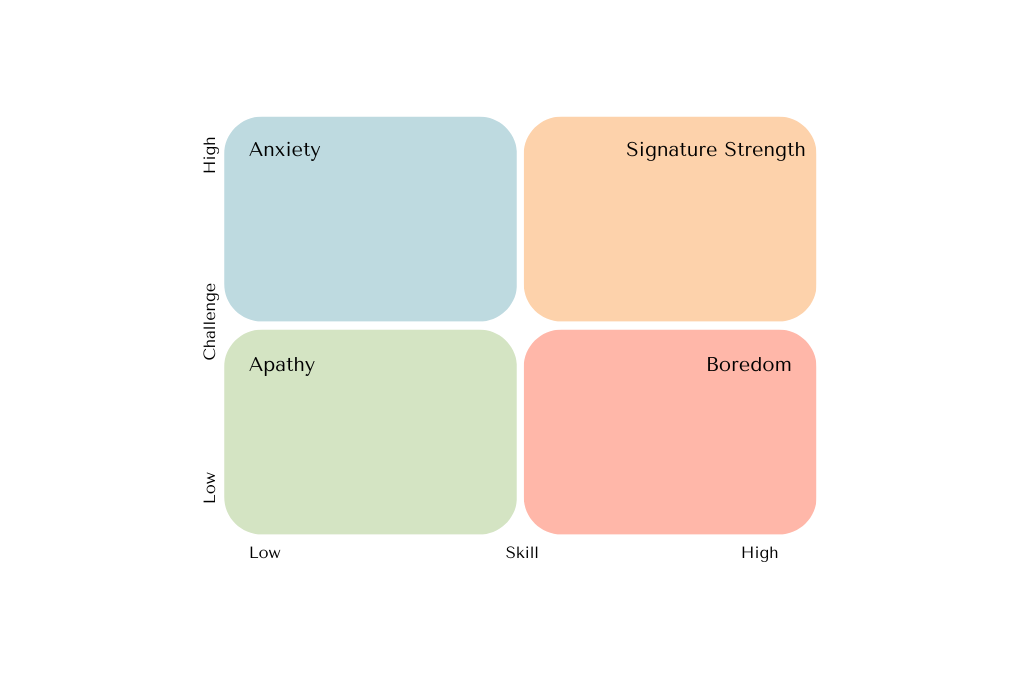
A highly successful independent technical specialist recently contacted me for help. His dilemma — he was bored and this left him anxious. My first question to him was: “If you were to hit the lottery, what would you be doing?” The answer to that question often reveals a person’s core signature strength. That strength is activated when the challenge you face matches your personal skills.
Greatest Skill
My client revealed that the most fulfilling time in his life was when he was a sales manager for a regional distributor. His ability to coach salespeople to high levels of achievement was his most rewarding challenge. That skill brought him the greatest career satisfaction and is, to this day. his signature strength.
Utilizing Strength
While my client is successful as a technical specialist, that work does not utilize his greatest strength. As the matrix above shows, he is challenged by the application of his technological skills, but his signature strength of coaching a sales team is not engaged. This leads to his boredom.
Syncing Challenge and Skill
As a youth, I discovered I was gifted in mathematics. This led me to study engineering. As a welding engineer, however, I wasn’t happy at a desk working on projects. While I was good at engineering, the job left me anxious. Fortunately, I met a man who recognized my greatest skill was in working with people. I took a position as a sales engineer with his company and, in short order, became a sales manager. Soon, I was promoted to vice president of sales. In that position, I used my signature strength of working with people. When my challenge and skill were in sync I found job fulfillment.
The Merger
Using programs I have developed, I am now teaching my technical client how to regain job fulfillment by employing his signature strength of coaching young sales leaders. There is no greater satisfaction in life, than using your signature strength to find a good challenge and merge it with your greatest skill.
Get tips and tricks like the above in The Art of Sales books. Or subscribe to the FREE monthly articles here.

by Art Waskey | Apr 4, 2023 | Art of Sales Weekly, Featured
Selling in the Digital World
A lot has changed in the world of selling in the past decade, including the role of the salesperson. The pandemic and digitalization have put a damper on many of the social aspects of selling. They have altered the art of the deal. Reps now have many layers of technology between them and their customers. Information is passed out over the internet, rather than over coffee and donuts.
Social media has bred social distancing. This has led to the misconception that sales reps no longer add value. In fact, the opposite is true. The greatest advantage a distributor and his sales team have is the personal relationships they have formed with their customers. People don’t sell to companies, they sell to people. To meet the challenge of selling in a digital world, sales reps need to develop a hybrid sales experience. They need to combine traditional in-person selling techniques with the use of digital tools.
A New Approach
“A new approach is needed that combines digital and human engagements to help buyers feel more confident in their decisions and drive high-quality deals,” according to a recent Gartner press release.
So, what do you need to develop this new approach? To start, the outside sales team must focus on added value. They do this by helping buyers make the right purchasing decisions. The value of a trusting relationship between sales and purchasing remains strong. People still, “don’t care how much you know, until they know how much you care.”
Next, you have to use the latest AI technology tools to identify your customers’ needs. If you combine good relationship selling with the best digital technology, no alternative supply chain channel can beat you.
A Hybrid Selling Strategy
Create a hybrid selling strategy for your team by combining the outside sales rep’s historic trusting relationship skills with current AI technology. You can continue to show up with donuts if that helps to close the deal. But be sure you have all the best technology tools in the bag as well.
Get tips and tricks like the above in The Art of Sales books. Or subscribe to the FREE monthly articles here.
by Art Waskey | Mar 26, 2023 | Art of Sales Weekly, Featured
Implementation
Forming and implementing an effective strategic plan is challenging. It takes building a good leadership team and developing a well-thought-out plan. However, the implementation of the plan is especially crucial. If your employees don’t understand and buy into the plan, it is useless. It would help if you had strategic communication.
Get the Best Views
In a recent article, Art Petty of the Art Petty Group talked about the importance of communicating strategy to your organization. He wrote: “If the work of strategy is cloistered in a conference room, don’t expect people to understand it when you unveil the outcome and don’t expect them to be able to add value quickly. The more important question I ask is, ‘What have you done to appeal to them on a personal level and have them excited about the work of bringing a new strategy to life?’ This is, of course, the missing part. In my experience, those close to the customers, business partners, and competitors, have the best views of what’s needed in a winning strategy. It’s wrong that they’re often the last to learn a new strategy. Work unceasingly to fix this problem. Help them develop clarity on the simple concept of strategy and find ways to let them define how to get there.”
Effective Communication Tools
Business leaders need to find tools that help to effectively communicate the inner workings of their strategic plans. Additionally, several of my clients have found that transparent quarterly reviews with all employees do this. These reviews include sales, expenses, earnings before interest, taxes, depreciation, and amortization (EBITDA), as well as the next steps to all strategic plans. Sessions allow for open discussion, including questions and answers.
Money is another great way to communicate the success of your strategic plan. Some of my clients pay a quarterly percentage of EBITDA to the employees. Recognize results as soon as they occur and watch employee morale soar.
Connect and Contribute
In conclusion, the ability to contribute and connect your business strategy to all team levels is essential. Use the right strategic communication tools and get your employees invested in being part of a cohesive team.
Get tips and tricks like the above in The Art of Sales books. Or subscribe to the FREE monthly articles here.

by Art Waskey | Mar 20, 2023 | Art of Sales Weekly, Featured
I work with small and medium business owners (SMBs) in the distribution sector and find they struggle with implementing meaningful strategic plans. As we know, corporate strategy starts at the top. Yet those at the top are often unsure which project should come next. This makes forming an effective plan difficult. To develop a strategy everyone can understand you need to pick the right team and make the right plan.
The Collective Good
Furthermore, to assemble an effective team to lead your strategic plan, pick the players within your organization who can work together.
In his book, The Advantage, Patrick Lencioni discusses building a cohesive leadership team. He advises that the team must be small enough (three to ten people) to be effective. Additionally, members must trust one another and be able to be genuinely vulnerable with each other. Lencioni writes: “At the heart of vulnerability lies the willingness of people to abandon their pride and their fear, to sacrifice their egos for the collective good of the team.”
Long-term Vision
To help with planning your strategy, I highly recommend you read Traction by Gino Wickman. Wickman has developed the concept of the Six Key Components of The Entrepreneurial Operating System (EOS). Thus, in his model, the EOS is led by a person that facilitates a team based on a long-term vision. Wickman says: “With a clear long-term vision in place, you’re ready to establish short-term priorities that contribute to achieving your vision. You will establish the three to seven most important priorities for the company, the ones that must be done in the next 90 days.”
Rocks
Wickman calls these important priorities Rocks. Rocks are bite-size chunks that are broken down into next steps with the goal of completion in 90 days. Team members meet regularly to engage in productive, unfiltered discussions of issues. The team leaves meetings with clear-cut, active, and specific agreements about decisions. They hold one another accountable to commitments and best behavior. Collective priorities and needs are focused on the larger organization rather than individual departments.
Pick and Plan
In conclusion, the cooperative effort necessary to implement a strategic plan is possible when you have a well-chosen team. By planning your next steps based on the needs of the larger organization, your business will grow. With a collaborative team and a carefully laid out strategic plan, you can pick and plan your way to success. Get tips and tricks like the above in The Art of Sales books. Or subscribe to the FREE monthly articles here.
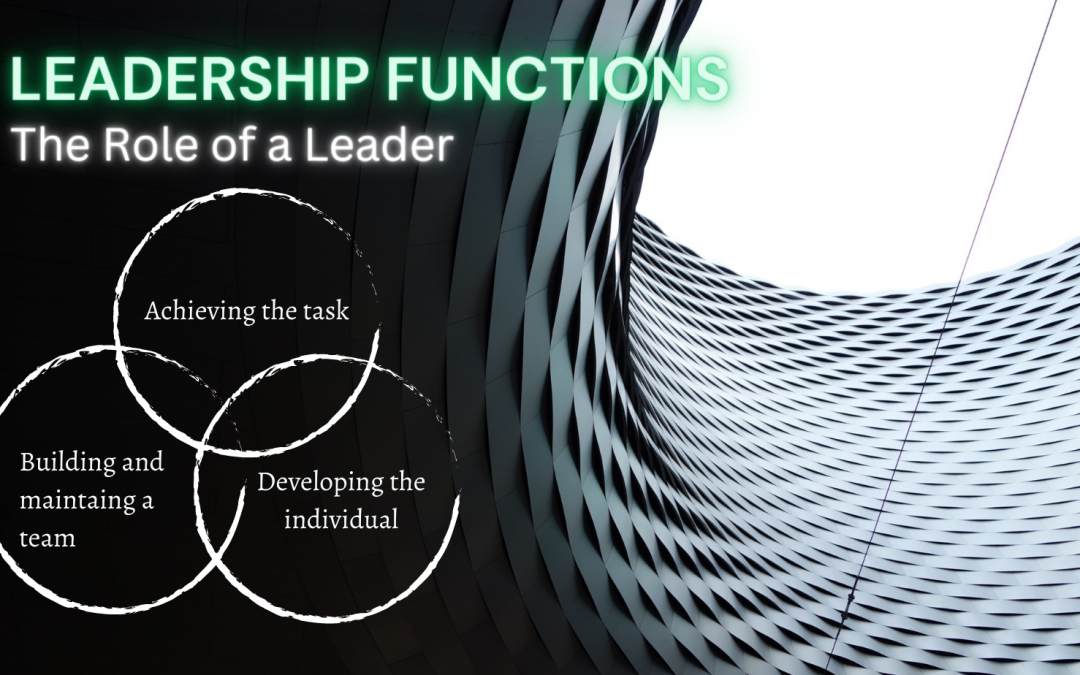
by Art Waskey | Mar 12, 2023 | Art of Sales Weekly, Featured
Leadership doesn’t just happen. To be functional it has to be promoted. Recently, in a Distributor Strategy Group webcast, Eric Chernik, CEO, of Building Controls & Solutions (BSC) provided excellent insight into defining functional leadership (700% Growth in 3 years Engagement Powers Growth for BSC, Distributor Strategy Group, January 25, 2023,). Chernik described being an employee enabler as his primary role.
Key competencies
In addition, to become a functional leader and successful enabler, here are four key competencies I suggest you work on.
- Empowerment. Firstly, Empower your employees by allowing them to express their passion and talent. Maintain an entrepreneurial spirit that maximizes each individual’s talents. Build strategic relationships across functional areas within the team and support employees with continued training.
- Manage corporate culture. Cultural change must be managed from the top. In his book, Good to Great, Jim Collins stated, “Build a culture around the idea of freedom and responsibility, within a framework.” That framework should include alleviating fear, removing overbearing controls, creating an atmosphere of transparency, and ensuring integrity.
- Hire right. Chernik stated that he didn’t buy companies primarily based on their financials but rather on their key employees. In addition, he found it crucial to get recommendations from those who had previously worked with the employees, rather than listed references. Your network of influence is valuable in hiring right. Alternatively, as a consultant with a 60-year career in atmospheric gas and welding distribution, I get frequent calls from suppliers and distributors for recommendations.
- Remove organizational politics. For example, be collaborative and take politics out of your organizational approach. Collaboration increases understanding and promotes better personal relationships between workers. To remove political pressure, Chernik suggests getting rid of titles. In order to sell to the customer, he explained that ability should be emphasized rather than position. In short, the flatter your organization, the less likely that politics will get in the way of success.
Functional leadership
Lastly, by achieving 700% growth in three years, Eric Chernik is proven to be a model leader. You can be one as well by promoting functional leadership. Similarly, hire the right employees, empower them to do their best, manage your corporate culture carefully, and keep organizational politics in check.
Get tips and tricks like the above in The Art of Sales books. Or subscribe to the FREE monthly articles here.
