by Art Waskey | Nov 21, 2022 | Art of Sales Weekly, Featured
In Baltimore City, Maryland, my father owned two 20-foot refrigerated displays in a store that sold meat. His five children learned how to develop a strong moral character from him. As an example of hard work and good business practices, he led us by example. As we age, we still adhere to those principles despite being in our 70s. This legacy he left his five children reminded me of the 5 Generation Legacy Rule.
The Five-Generation Rule
What some call the “five-generation rule” refers to the effect of how a parent raises their child on future generations. The love they give, the values they teach, the emotional environment they offer, and the education they provide. This can all influence not only their children but the four generations to follow, either for good or evil.
Furthermore, in an article by Larry Ballard, he discusses how radically different generational outcomes can be depending on the parents’ actions. He describes how American educator A.E. Winship traced the descendants of Jonathan Edwards almost 150 years after his death. Alternatively, his findings are remarkable, especially when compared to the ancestors of another man from the same time period known as Max Jukes.
Multi-Generational Success
Jonathan Edwards a puritan preacher, in the 1700s, was one of the most respected preachers of his day. He attended Yale University at the age of thirteen and later went on to become the president of Princeton College.
Further, Edwards’ 5 Generational Legacy includes 1 U.S. vice-president, 1 dean of a law school, 1 dean of a medical school, 3 U.S. Senators, 3 governors, 3 mayors, 13 college presidents, 30 judges, 60 doctors, 65 professors, 75 Military officers, 80 public office holders, 100 lawyers, 100 clergymen, and 285 college graduates.
Multi-Generational Dysfunction
In contrast, Max Jukes’ legacy came to people’s attention when the family trees of 42 different men in the New York prison system were traced back to him. He lived in New York at about the same time as Edwards. The Jukes family originally was studied by sociologist Richard L. Dugdale in 1877.
In addition, Jukes’ 5 generations of descendants included: 7 murderers, 60 thieves, 190 prostitutes, 150 other convicts, 310 paupers, and 440 who were physically wrecked by addiction to alcohol. Of the 1,200 descendants that were studied, 300 died prematurely.
The Legacy You Leave
Lastly, Ballard concludes his discussion by asking — If someone studied your descendants four generations later, what would you want them to discover? The life you live will determine the legacy you leave. In both your personal and professional life, lead by a good example and create a path to success for 5 generations.
Get tips and tricks like the above in The Art of Sales books. Or subscribe to the FREE monthly articles here.
Image retrieved from: https://news.blr.com/app/uploads/sites/3/2019/09/Generations.jpg
by Art Waskey | Nov 14, 2022 | Art of Sales Weekly, Featured
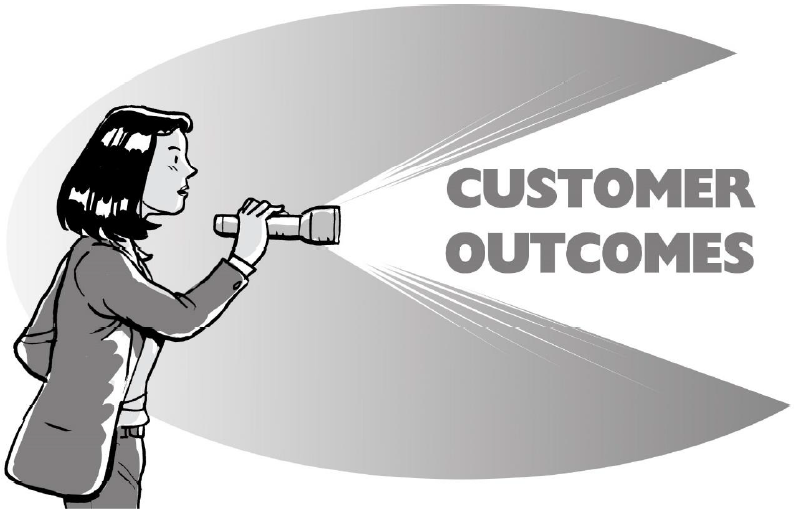
B2B buyers are doing a lot of purchasing online these days — about $1.6 trillion annually according to projections by Digital Commerce 360. Are buyers happy with these transactions? A survey of digital buyers from 150 companies finds that 97% of online buyers experience some pain point during the eCommerce purchasing process. And 94% of B2B buyers agree their company prefers to work with suppliers that continuously evolve their digital capabilities. Be sure you are paying attention to more than just the online sales figure. What are your actual customer outcomes?
Be Customer-Centric
I have been reading a lot on the topic of online purchasing that supports the findings above. The impersonal nature of online selling and its related pain points represent an opportunity for the independent distributor who knows his customers. As the post-pandemic business model moves toward more digital commerce, the distributor must become even more customer-centric.
Customer Experience
In a recent post, business innovation expert Mark Dancer explains that distributors often say that they are becoming customer experience (CX) companies. He defines CX as how customers interact with brands, products, and services. CX business models gaze inward. They are designed to optimize the processes under which the supplier operates to serve its customers.
Customer Outcomes
Customer outcomes (CO), on the other hand, measure customer satisfaction with the purchasing process. Good customer outcomes ensure that the supply chain prospers only if customers prosper. According to Dancer, the future of distribution is the relentless pursuit of CO, not CX.
Dancer finds most leaders say they’re customer-centric, but if everything they measure is CX, how could that be true? Revenue, growth, and other Key Performance Indicators (KPIs) measure how customers perform for the company. Organizations that wish to be customer-centric —and maximize growth—must also measure how the company is performing for its customers (CO).
Be Effective
Finally, distributors need to become a flexible resource that enables ever-better business results and innovations in the customer’s business. To do so, evolve your digital capabilities. As Dancer suggests, these should yield better customer outcomes. The right ERP, CRM, and AI-driven customer analytics can provide customer-centric support. And Lastly, Partner with your customers to build more effective KPIs for customer outcomes and eliminate their online purchasing pain.
Get tips and tricks like the above in The Art of Sales books. Or subscribe to the FREE monthly articles here.
Image retrieved from: https://pm-powerconsulting.com/wp-content/uploads/2020/07/CUSTOMER-OUTCOMES-PIC.png

by Art Waskey | Nov 7, 2022 | Art of Sales Weekly, Featured
My son-in-law works in the motion picture industry. The film projects he works on were staffed with people from multiple companies as well as independent contractors. Making a film requires a complex network of interconnected systems, known as a workforce ecosystem.
Digital integration
In addition, to being intermediaries in a value chain, distributors are a part of a workforce ecosystem. As part of a complex and critical supply chain, they handle detailed information. Additionally, product and service identity, pricing, inventory location, and delivery are all part of a chain. Above all, this will help the end user get their work done. Suddenly, workplace ecosystems have been changing at a high rate in recent years. Now that companies are more digitally integrated and forced to be responsive as a result of this shift. Now, to be competitive in today’s workforce ecosystem you need to operate with the latest software and digital tools and platforms.
Mining data
According to Mark Dancer, “Companies that buy products from distributors will always seek to create value for them. And the users that use them will often measure the total cost of ownership, worker productivity, and the quality of the products and services needed for the end user. What’s new is, realizing that doing this can be an extension of the supply chain. With offerings not based on vague value propositions but through the value to create and measure new, and more comprehensive data.” Furthermore, he adds, “No matter what the delivery mechanism is, supply chain companies are at the center of providing this capability.” Independent distributors should consider using their ERPs to mine data downstream of customer orders. However, ERP technology distributors can solve problems and provide the right product based on data collected from actual client interactions.
Be competitive
To conclude, local distributors are at the center of these complex supply chains, which continue to evolve. To remain competitive in the workplace ecosystem, you must create added-value product offerings and services based on the comprehensive data available through your digital technology platforms.
Get tips and tricks like the above in The Art of Sales books. Or subscribe to the FREE monthly articles here
Image retrieved from: https://www.slideegg.com/image/catalog/477129-business%20ecosystem.png

by Art Waskey | Oct 24, 2022 | Art of Sales Weekly
Electric Vehicles (EVS) are coming. I have two Gen X children who are now working professionals and both drive Chevrolet Bolt EVs. In a recent article, Ford’s CEO, Jim Farley, said the pending electric vehicle price war would drive their sell price down to $25,000. The EV field already has many choices. In highly competitive markets like this what determines success? It usually comes down to added-value differentiators.
The Supercharger
Furthermore, EV front-runner, Tesla, continues to work on its strategic plan that focuses on added value to car owners. For example, Tesla’s Supercharger network is easily one of the company’s smartest ideas. Since it takes 20 to 30 minutes to supercharge, Tesla wants its clients to be entertained while waiting. The company strategically places charging stations at big-box stores near major highway interchanges so customers can walk to a restaurant and shops. In Germany, Tesla recently installed a heated pool at a Supercharger.
With major changes in-car technology and selling methods, the automotive industry must focus on added values to lure customers. Distribution sales are no different. Technology and selling methods have changed for distributors as well. Distributors need to offer added-value propositions to differentiate themselves from alternative virtual channels.
Added Value Propositions
Here are some of the areas to focus on when considering how to supercharge your added-value offerings.
- Customer service – The greatest advantage a distributor has over online verticals is customer contact. Continue to find ways to improve customer service.
- Convenience – Focus on improving store stocking and maintaining a competent staff. Assist your customers in product selection and education. Add free beverages and internet to your stores so clients are more inclined to linger. Costco’s product samples are a good example of how to attract interest in your store.
- Complexity – Find ways to bundle your products or include assembly and training. Some distributors ask their customers to bring their projects to the store so they can be reviewed for more efficient production methods.
- Digital technology – The more digitalization a distributor can deploy in its ERP the better. It enables you to demonstrate speed, accuracy, and an understanding of the customer and their needs.
Best Price Differentiator
Lastly, distributors can take a lesson from the automobile industry. As Tesla continues to demonstrate, in a competitive market added value is the best price differentiator.

by Art Waskey | Oct 17, 2022 | Art of Sales Weekly
A sales manager recently described his travel day with a rep who needed to close more business. They called on six prospective accounts and the manager expected to close on three. When I spoke to the rep, he described the manager as too direct and complained that his tactics made the rep uncomfortable. I thought the sales manager’s actions demonstrated advanced selling skills, however. To gain perspective on the best approach to a sale, let’s look at the psychodynamics of the successful salesperson.
Important characteristics
Here are the characteristics I believe are most important to closing deals.
- Self-confidence – It is critical to walk into a prospective account with the confidence that you are going to close the sale. Believe that your customer needs what you have to offer. Know your product.
- Be engaging – Whether you are talking to the receptionist, an employee you pass in the hallway, or the decision-maker, ask questions and listen. If you can get a person to speak to you for 15 minutes, they will trust you. As Zig Ziglar used to say, “People don’t care how much you know until they know how much you care.” Be engaging —let your prospect know you care.
- Knowledgeable – Have confidence that your product or service is something the customer needs. Don’t share information that isn’t requested. Keep answers brief and always ask another question.
- Trustworthy – Being trustworthy is doing what you say you are going to when promised, and in the manner, you described.
Close the deal
The sales manager described above had the confidence and knowledge to close the deal. He could engage his customer in productive discussions and gain clients’ trust. Use psychodynamics—self-confidence, engagement, knowledge, and trustworthiness —to create long-lasting, strong customer relationships and close those deals!
by Art Waskey | Sep 26, 2022 | Art of Sales Weekly, Featured
How to Measure Success
While VP of Sales, I oversaw a hospital account that was among our leading 10 customers. Their purchases topped the charts. Yet our CFO questioned the account’s profitability when their contract came up every 5 years. Due to the competitive pressures in healthcare, the pricing of the products was not increasing from contract to contract. The volume was tremendous and the product mix carried some of the best gross margins. The question kept coming up about the account’s net profit. How do you measure your high-value customers in today’s diverse marketplace?
Determining Profitability
In the seminal book, “Choose Your Customer”, Jonathan Byrnes and John Wass state: “determining the true profitability of our customers is one of the biggest problems for companies today.” They described the shift from the Age of Mass Markets, where managers had a clear responsibility to look after their unique department, to the Age of Diverse Markets in which managers are responsible for net profit contribution. With today’s robust digital ERP capabilities a company can perform transaction-based profit metrics and analytics across multiple fields.
Byrnes and Wass explain, “Instead of assuming that revenue maximization is the objective of the account management process, leading managers now understand that directly maximizing all-in customer net profitability is the right objective.”
The Net Profit Viewpoint
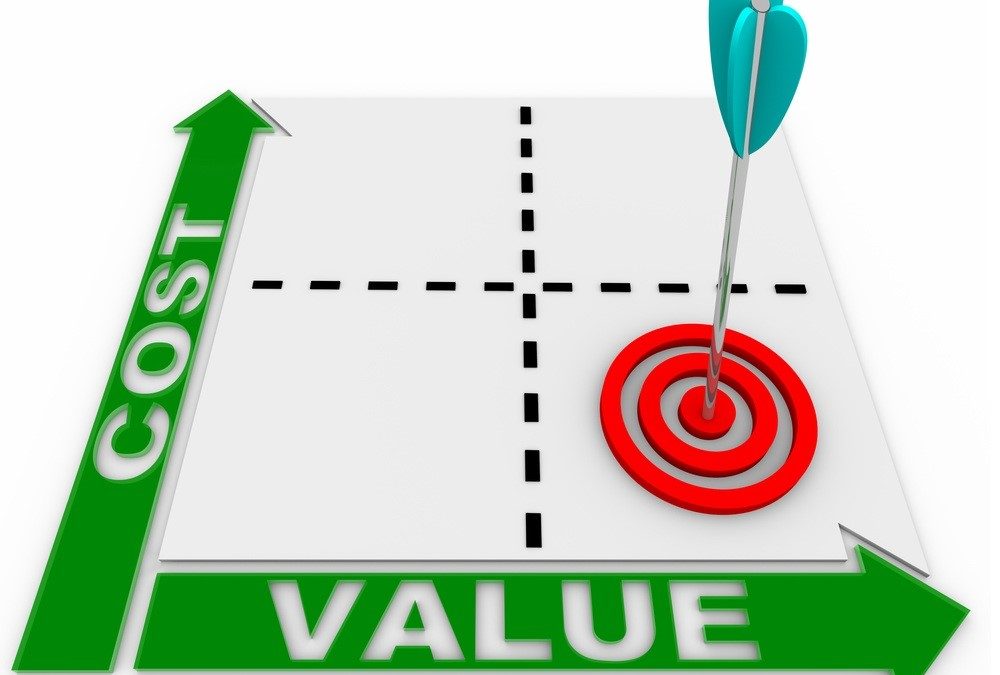
Additionally, In the Age of Diverse Markets, it is feasible to look at each transaction from a net profit viewpoint. This is accomplished by digitally collecting all cost aspects of each transaction. In the opening hospital illustration, there were exorbitant distribution costs involved in making deliveries to multiple locations. Furthermore, deliveries consumed a driver’s full day on multiple days each week. Additional costs accrued by having to correct persistent administrative and billing issues unique to the account. All costs considered, the hospital account produced negative net profits. It was not a high-value account and was reclassified as a profit drain.
Sales Effectiveness
Lastly, with digitally evaluated transaction-based profit metrics and analytics, companies can move to the ultimate level of sales effectiveness. High-value customers should no longer be appraised on revenues, or gross margins, but on their net profit contribution.
Get more tips and tricks by purchasing The Art of Sales books. Or subscribe to the FREE monthly articles here.

by Art Waskey | Sep 19, 2022 | Art of Sales Weekly, Featured
Get Organized
Twenty years ago, as the VP of Sales for industrial gas and welding supply company, I started writing a monthly column, “The Art of Sales,” for CryoGas International (now Gasworld). The magazine focused on the industrial gas distribution business. My articles were directed at that audience and contained sales tips and stories. Today I am a consultant to that sector, have my own blog and continue to contribute to industry publications. While I still write on sales skills, I have noted that the rapid and critical change in commerce has prompted the need to concentrate more on digital and organizational practices. Many clients are asking, “What should I do with my business now?”
The Digital Transformation
Furthermore, much of my writing relates to how to deal with the marketplace disruption caused by the pandemic. For example, consultants no longer spend their time on planes in order to make face-to-face meetings. Appointments are now virtual. Also, COVID accelerated the digital transformation, and the distribution business, like all others, is feeling the shift.
Advanced ERPs, eCommerce, and virtual product content have radically changed sales responsibilities. Furthermore, Reps have moved from product presentations, quoting, checking inventory, and tracking orders, to added-value consulting and answering questions about products the customer procurement team has already researched online. Also, the distributor faces the added challenge of competing with manufacturers that can sell directly to customers, or through marketplace alternatives.
Business Choices
These facts beg the question – what do I do with my independent distributorship now? I have observed three typical responses:
- Sell out to a conglomerate
- Transfer the business to your employees through stock ownership programs, such as ESOPs
- Hire a qualified consultant to bring your company up to date
Primary Priorities
Regarding option 3, there are qualified senior executives with years of experience who know how to navigate the distributor’s challenges in the digital marketplace. Thus, The most essential primary priorities are to apply organic/systemic organizational skills nimbly and invest in digital proficiency. The most effective means to accomplish this urgent progression is finding people that understand your business – those who have “walked in your shoes.” Henceforth, talent can be developed internally or externally. You probably already have employees who have unidentified digital skills that could be enhancing your business.
In conclusion, what should you do with your business to compete in today’s marketplace? Develop your organizational skills and digital proficiency … and do it now.
Get tips and tricks like the above in The Art of Sales books. Or subscribe to the FREE monthly articles here.

by Art Waskey | Sep 12, 2022 | Art of Sales Weekly, Featured
A lot to Consider
As an independent regional distributor, you need to take a close look at where to invest your digital dollars. In a recent MDM webcast, Alex Moazed and Nick Johnson talk about distributors entering the digital domain. They discuss the recent proliferation of industrial-specific verticals: Berkshire e-Supply (industrial products), Bluon (HVAC), Parts Town (OEM foodservice equipment), Volition (industrial parts), and ODP Corp.’s Varis platform (office products). Moazed and Johnson emphasize that digital B2B marketplaces aren’t for everyone. Before getting involved, consider your distributor differentiation.
A Small Slice of the Pie
Moazed and Johnson point out, that while the level of investment in digital marketplaces from distributors is undoubtedly accelerated in recent years, it’s still coming from just a very small slice of the pie. In the atmospheric gases industry, a few forward-thinking companies got into marketplace verticals early. Most have found the margins slim. Furthermore, digital sales appear to be an alternative to buying from the company’s mortar and brick stores and are regional in nature.
Focus on Analytics
The historical strength of the independent distributor is in its local resources and relationship to its customer base. Rather than investing in buying platforms, focus on improving your technical skills, facilities, and personnel. Additionally, the best investment you can make is in digitizing and growing your analytics. As Jonathan Byrnes and John Wass suggest in their book, “Choose Your Customer”, take a close look at your high-profit customers through transaction-based profit metrics. Track their erosion and growth. Byrnes and Wass suggest marking these accounts in the database so that your customer contact people know who they are. Build teams within your organization that focus on your relationship with these customers.
Walk in their Shoes
Lastly, find ways to walk in your high-profit customers’ shoes. Join with select clients to identify and develop new value footprint opportunities, ones that may not be obvious initially. Your high-profit customer relationship is your distributor differentiation.
Get tips and tricks like the above in The Art of Sales books. Or subscribe to the FREE monthly articles here.

by Art Waskey | Aug 29, 2022 | Art of Sales Weekly, Featured
Key Differentiator
Many B2B purchases are made before a consumer even contacts a vendor. According to data from SiriusDecisions, 67% of the purchasing process is completed digitally. In spite of this, one of my first areas of focus as a consultant to small business entrepreneurs is improving their digital platforms. According to a survey conducted by The Brooks Group, “Eighty- seven percent of B2B buyers say they would pay more to a supplier with better digital tools. Furthermore, Enabling digital transformation has become another key differentiator.”
Steps to Digital Integration
How can a growing small business affordably upgrade its digital platform? I suggest considering these steps:
Find the right ERP provider – With the right ERP software, you can collect, store, manage, and interpret data from all your business activities. In many ways, it is similar to the operating system on your computer. Make contact with several ERP providers and get quotes from each. In addition, Look for groups active in your industry. Using the Internet and your network are both good ways to find out about many groups. On the other hand, based on previous experiences, it may be best to offer cost savings. Innovations will reduce costs as technology advances, but competition and product development will increase as well.
Add a B2B eCommerce integrator – A provider can create the software to electronically allow buying and selling of products through online services or over the internet. A B2B integrator provides strategy, software, and solutions to integrate your ERP with that of your customers. The measuring system is the communication piece between the supplier and its customers. It allows you to set up an eCommerce platform for each end-user.
Be Digitally Competent
Finally, your website is only the start of your digital journey. To compete in the challenging world of eCommerce, you must be digitally competent. Your website must be visually appealing as well as digitally established. Consider hiring a developer who can help create a digital foundation for your business and marketing efforts. Lastly, as the number and size of alternative internet providers grow, enabling digital transformation will be a key differentiator to your business’ success.
Get tips and tricks like the above in The Art of Sales books. Or subscribe to the FREE monthly articles here.

by Art Waskey | Aug 22, 2022 | Art of Sales Weekly, Featured
Remind Customers of Your Value
As Benjamin Franklin said, “The bitterness of poor quality remains long after the sweetness of low price is forgotten.” In today’s world of competitive alternative virtual purchasing channels, it’s important to remind your customers that price isn’t everything. Learn to justify your price.
At the beginning of my career, I worked for an international atmospheric gas and welding company as a territory sales engineer. There were eight independent distributors in Texas who were my customers. Floyd was the sales manager for one of those Fort Worth distributors.
He allowed me to listen to a return call to one of his top 10 accounts. The customer was leaving them for lower pricing. Floyd reminded the buyer of the special inventory his company had stocked for them and the added services they provided. Then, he thanked the buyer for their years of business. After the call, Floyd told me the customer would be back within 6 months. He was right. Lastly, Floyd has successfully justified his pricing.
New Pricing Pressures
Today sales calls are a world apart from my experience with Floyd in the 70s. With a multitude of alternative channels available to the buyer, we face very different competitive pricing pressures. Some basic sales principles never change, however. Consider these suggestions when faced with lower pricing pressure.
The fear of the unknown – Remember the last time you bought something online and received a product you didn’t expect? What was it like to return it? It probably was an ordeal you would rather not repeat. As an independent distributor, your customer knows he/she can count on you to resolve issues without a hassle. Remind them of this value that you offer. The fear of the unknown often outweighs the gain of a cheap price.
The total cost of business – In our distributorship, we recorded all customer interactions in call reports. In annual review meetings with our top customers, we would share the list of the added-value services provided and included in the price. Those services included deliveries per month, technical assistance, order fill rate, face-to-face rep calls, vendor joint calls, and eCommerce order rates. By making our customers aware of the cost associated with delivering added values, they perceived our price as justifiable.
Understanding True Value
As Steven Tyler once said, “You’d be surprised how expensive it is to look this cheap.” Justify your price. Make the case that price isn’t everything by letting your customers know the true value of your business relationship.
Get tips and tricks like the above in The Art of Sales books. Or subscribe to the FREE monthly articles here.