
A wake-up call – VMI
Rapid technological advancements are transforming how markets operate and how buying behaviors evolve, as buyers and sellers seek more efficient ways to conduct business.
For example, in 2010 the distributor I was working for noticed sales stopped in a key account. When we investigated, we found a non-traditional supply chain competitor had taken the business by adding a new type of equipment — a vendor-managed inventory (VMI) machine. Sales could be made at a vending machine with no human pitching the sale. The change was about labor savings and a leaner way for the customer to do business. Our response was to sign a contract with a VMI manufacturer and start installing our own equipment in key accounts. That shift in the buying process was a wake-up call to a new movement in sales transactions.
Another wake-up call – Ecommerce
The next shift came with the introduction of ecommerce and the emergence of a new group of non-traditional competitors. Also, they had names like Amazon, Grainger, and SMC. These virtual ecommerce distributors sold products through their websites and offered next-day delivery to the customer’s front door. The traditional distributors needed to respond with websites capable of handling e-commerce.
While ecommerce operated without the personal interaction of a salesperson and a customer, a person still did the searching online. You can complete purchases with just one click. Brian Hopkins, of Distribution Strategy Group (DSG), described e-commerce well in a recent article, “…every version of that process [e-commerce], from paper catalogs to punch-out to modern web stores, was built around a person doing the browsing, the photography, the merchandising, the search bar, the account login, all assume a set of human eyes on the other side of the screen.”
And then came AI.
The latest wake-up call – AI
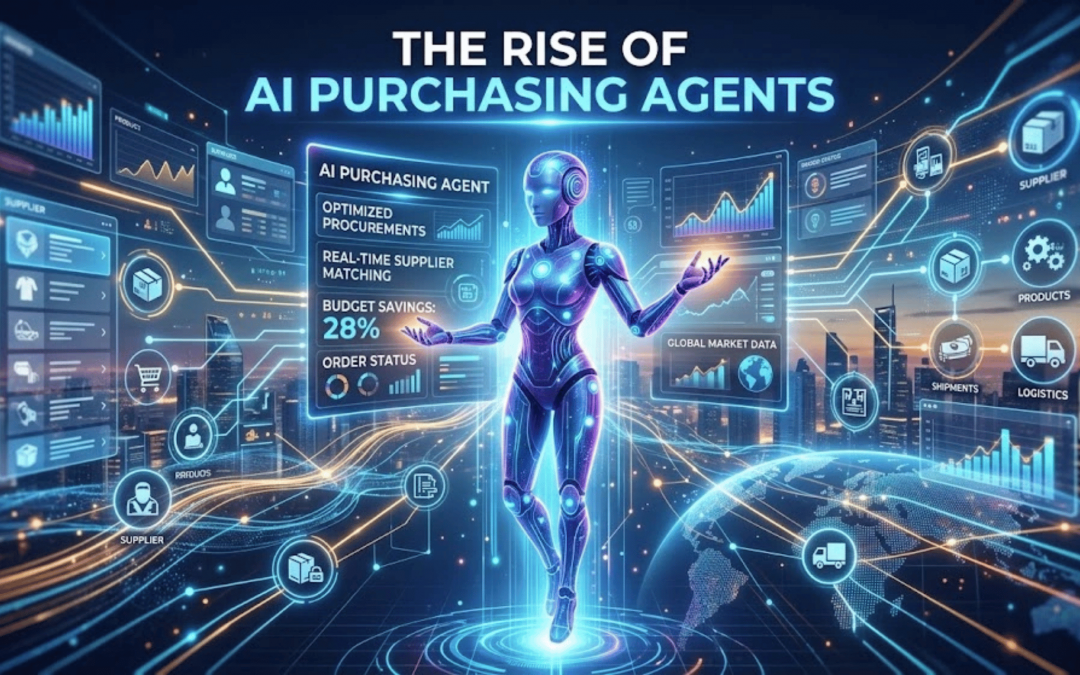
What happens when your customer’s purchasing department hands over the purchasing task to an AI agent? The human element is completely gone. The agent searches across all suppliers, compares specs, delivery options, and price, and makes the purchase. Independent distributors rely on their ability to offer personalized service to differentiate them in the market. With AI, there are no people. This makes it a big threat to the traditional independent distributor. Hopkins offers this advice. If your product and service data is complete and correct — specs, dimensions, compatibility, availability, and price — an agent searching your catalog will still find you, and still buy from you.
Win With the Cleanest Data
In conclusion, personalization is what the traditional independent distributor relies on for customer loyalty. Each of these buying shifts, VMI, e-commerce, and AI, represents a loss of personalization in business transactions. To offset this, independent distributors need to make sure their information is online and up-to-date at all times. Lastly, the winning contracts and sales won’t go to the best person but to the product and service providers with the cleanest data.
Get tips and tricks like the above in The Art of Sales books. Or subscribe to the FREE monthly articles here.